
 See My Latest Article on HelloNation
What does “play style” mean in dog daycare?
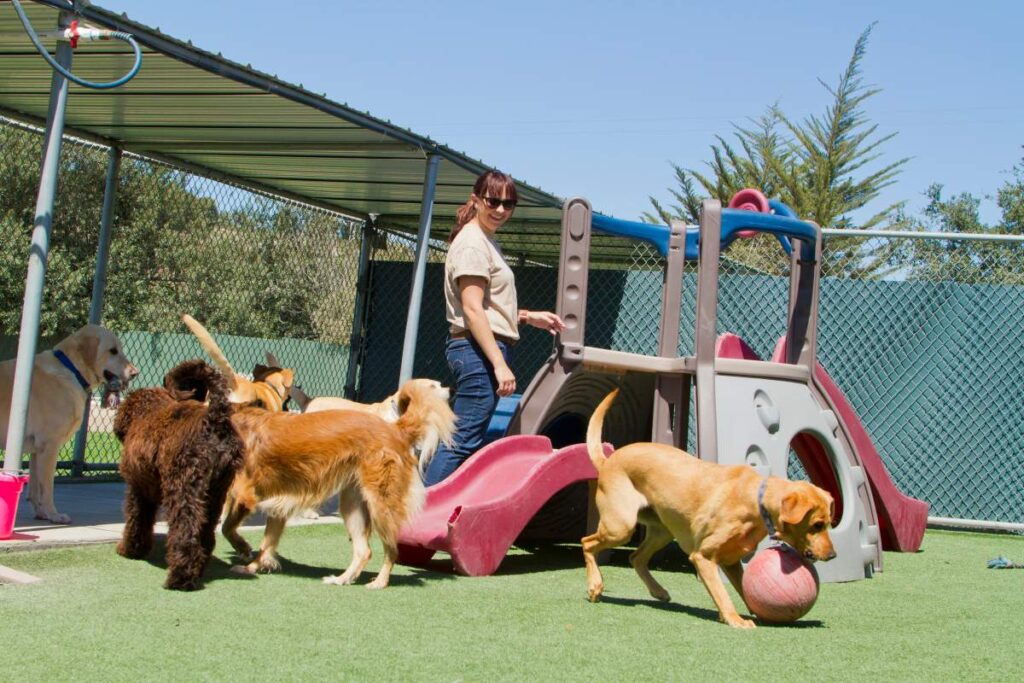
Professional dog daycares usually match dogs by more than age, breed, or size. Play style describes how a dog interacts with other dogs, including energy level, body language, preferred games, communication habits, and ability to settle after excitement.
A dog that enjoys gentle chasing may not be comfortable with a dog that plays by body-slamming or wrestling. Likewise, a highly energetic dog may overwhelm a quiet dog even if both are friendly. Good group matching is intended to reduce stress, prevent repeated conflicts, and give each dog a safer, more comfortable social experience.
Common play-style categories include:
- Gentle or social play, such as brief chasing, play bows, and relaxed movement
- Wrestling and body-contact play
- Fast-paced running and chase games
- Toy-focused play
- Human-oriented dogs that prefer attention over dog-to-dog interaction
- Cautious or selective dogs that need more space and slower introductions
- Dogs that enjoy being near others but do not want constant interaction
These categories are not permanent labels. A dog’s behavior can change based on age, health, past experiences, the group of dogs present, and the environment.
How is a dog’s play style assessed?
A daycare typically begins with information from the owner, followed by direct observation. The initial conversation may cover the dog’s history with other dogs, previous daycare experience, resource guarding, sensitivity to handling, fear triggers, and preferred activities.
Staff may then observe the dog in a controlled setting rather than placing it immediately into a large group. The evaluation often considers:
- Whether the dog approaches other dogs with a loose, relaxed body
- Whether the dog responds appropriately to signals from other dogs
- Whether the dog can pause or disengage from play
- Whether the dog becomes overstimulated or fixated
- Whether the dog guards food, toys, resting areas, or people
- Whether the dog hides, freezes, avoids eye contact, or repeatedly tries to escape
- How quickly the dog recovers after excitement or a correction from another dog
A friendly dog is not automatically a good fit for every group. Staff are looking for social flexibility, not simply enthusiasm.
Why is body language more useful than breed or size?
Size and breed characteristics can provide background information, but they do not reliably predict compatibility. Two dogs of similar size may have completely different communication styles. A smaller dog may confidently enjoy active play, while a larger dog may prefer calm companionship.
Body language gives staff more useful information in the moment. Relaxed movement, curved approaches, play bows, soft facial expressions, and natural pauses generally suggest comfort. Stiff posture, prolonged staring, tucked tails, lip licking, repeated avoidance, or sudden freezing can indicate discomfort or rising tension.
Play can also look noisy without being aggressive. Barking, growling, and open-mouthed expressions may occur during appropriate play. The surrounding body language matters. Loose movement and turn-taking are different from stiffness, cornering, persistent chasing, or ignoring another dog’s attempts to stop.
How are dogs grouped during the day?
Many facilities use several factors at once rather than creating one large mixed group. Dogs may be divided according to play intensity, confidence, size, age, and ability to rest.
A typical group might include dogs that enjoy moderate chasing and frequent pauses. Another may be better suited to dogs that prefer wrestling and physical play. Some dogs may receive shorter social periods, individual enrichment, or carefully selected one-on-one interactions instead of full-group play.
Group decisions may also change during the day. A dog that plays appropriately in the morning may become tired, irritable, or less responsive after extended activity. Rotations, rest periods, and quieter spaces help prevent fatigue from turning into conflict.
Puppies and adolescent dogs often require special consideration. They may be enthusiastic but lack self-control, which can frustrate older dogs. Senior dogs may tolerate social contact but need shorter sessions and more opportunities to rest. Dogs with mobility limitations may need groups that avoid hard collisions and rapid turns.
What happens when two dogs seem friendly but are still a poor match?
Compatibility is not based only on whether dogs can stand near one another without fighting. A poor match may involve repeated pestering, unwanted mounting, relentless chasing, crowding, or one dog consistently trying to leave.
Staff may interrupt play when:
- One dog cannot disengage
- The same dog is repeatedly targeted
- Play becomes one-sided
- A dog continues after another dog has signaled discomfort
- Excitement rises faster than the dogs can regulate
- Multiple dogs begin joining a chase or confrontation
- A dog stops responding to normal social cues
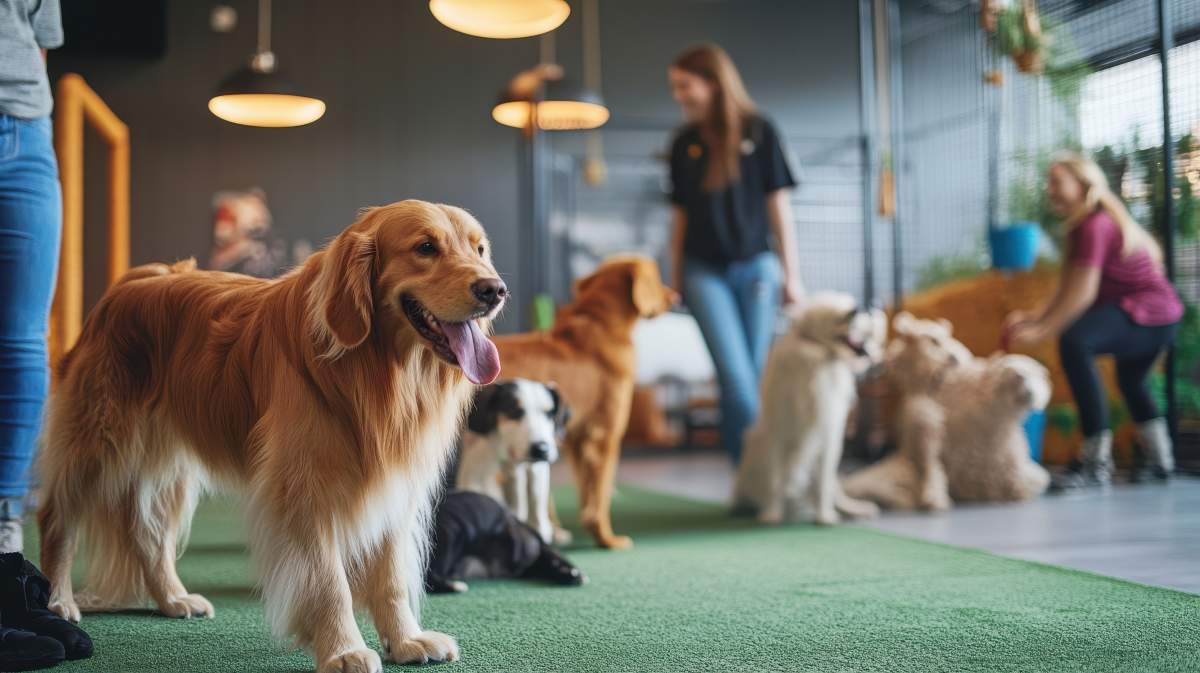
An appropriate interruption should be calm and timely. Dogs may be separated briefly, redirected to another activity, or moved to a quieter area. If the same pattern continues, the dogs may not be placed together again, even if no injury occurred.
Do toys affect group matching?
Yes. Toys can change the social dynamics of a group, especially for dogs that guard objects or become intensely focused on retrieving. Some groups may use toys only under close supervision, while others may rely on open play without shared objects.
Toy preference is also part of play style. A dog that wants to chase a ball repeatedly may frustrate dogs that prefer wrestling. A dog that carries a toy away may be comfortable, while a dog that stiffens or snaps when another dog approaches may need a different setup.
Food, treats, and resting spaces require similar care. Shared resources should not be assumed to be harmless simply because dogs have played successfully together.
How do seasonal conditions affect daycare play in Eau Claire?
Seasonal weather can influence both group composition and activity levels. During hot, humid weather, dogs may tire more quickly and require additional water, shade, cooling periods, and indoor rest. During winter, cold temperatures, snow, ice, and road salt can limit outdoor activity and make indoor space more important.
Wet coats, muddy yards, and reduced daylight can also affect comfort and supervision. A dog that normally enjoys active outdoor play may prefer shorter sessions when surfaces are slippery or conditions are uncomfortable.
Local households may also notice changes in behavior during stormy weather, extreme cold, or long stretches indoors. Dogs that are restless from reduced exercise may become more intense in group play, while anxious dogs may need a quieter routine.
Can a dog’s play style change over time?
Yes. Play style can change with maturity, stress, illness, injury, medication, or a negative social experience. A young dog may become less tolerant of rough play as it matures. A normally social dog may avoid interaction when tired or uncomfortable.
Sudden changes deserve attention. A dog that abruptly becomes irritable, withdrawn, unusually fearful, or unable to settle may be experiencing pain or another health problem. Daycare observations can provide useful information, but they do not replace veterinary evaluation when behavior changes are persistent or unexplained.
Owners can help by providing accurate updates about health, sleep, recent household changes, previous incidents, and behavior outside daycare. Matching is most reliable when staff have current information rather than relying only on an earlier evaluation.
What should residents ask about dog matching policies?
Before using group daycare, residents may want clear answers about how dogs are evaluated, introduced, supervised, separated, and given rest. Useful questions include:
- Are new dogs introduced gradually?
- How are play groups organized?
- How often are dogs given quiet breaks?
- What behavior causes a dog to be removed from a group?
- How are injuries, conflicts, or repeated stress signals documented?
- Are toys, food, and resting areas managed separately?
- How are senior dogs, puppies, and dogs with mobility limitations accommodated?
- What happens if a dog prefers human interaction over group play?
A thoughtful matching process does not promise that every dog will enjoy daycare. It recognizes that some dogs prefer individual care, short social sessions, or calm companionship. The goal is not to make every dog participate in the same type of play. The goal is to create a setting where each dog can remain comfortable, communicate clearly, and recover from excitement before play becomes overwhelming.