

 See My Latest Article on HelloNation

Why can the return to school be stressful for dogs?
Dogs often notice changes in household routines before people realize how much has changed. During summer, children may be home more often, walks may happen at different times, and the house may stay active throughout the day. When school begins, those patterns can change suddenly.
For some dogs, the adjustment is minor. Others may show signs of stress when the household becomes quiet or when familiar family members leave for several hours. Possible signs include:
- Barking, whining, or pacing after the family leaves
- Chewing, scratching, or other destructive behavior
- Indoor accidents despite previous house-training
- Excessive sleeping or reduced interest in food
- Following adults closely before departure or after they return
- Overexcitement, jumping, or difficulty settling in the evening
These behaviors do not necessarily mean a dog is being stubborn. They may reflect separation-related distress, excess energy, confusion about the new schedule, or difficulty relaxing without the children present.
How can dog daycare support the transition?
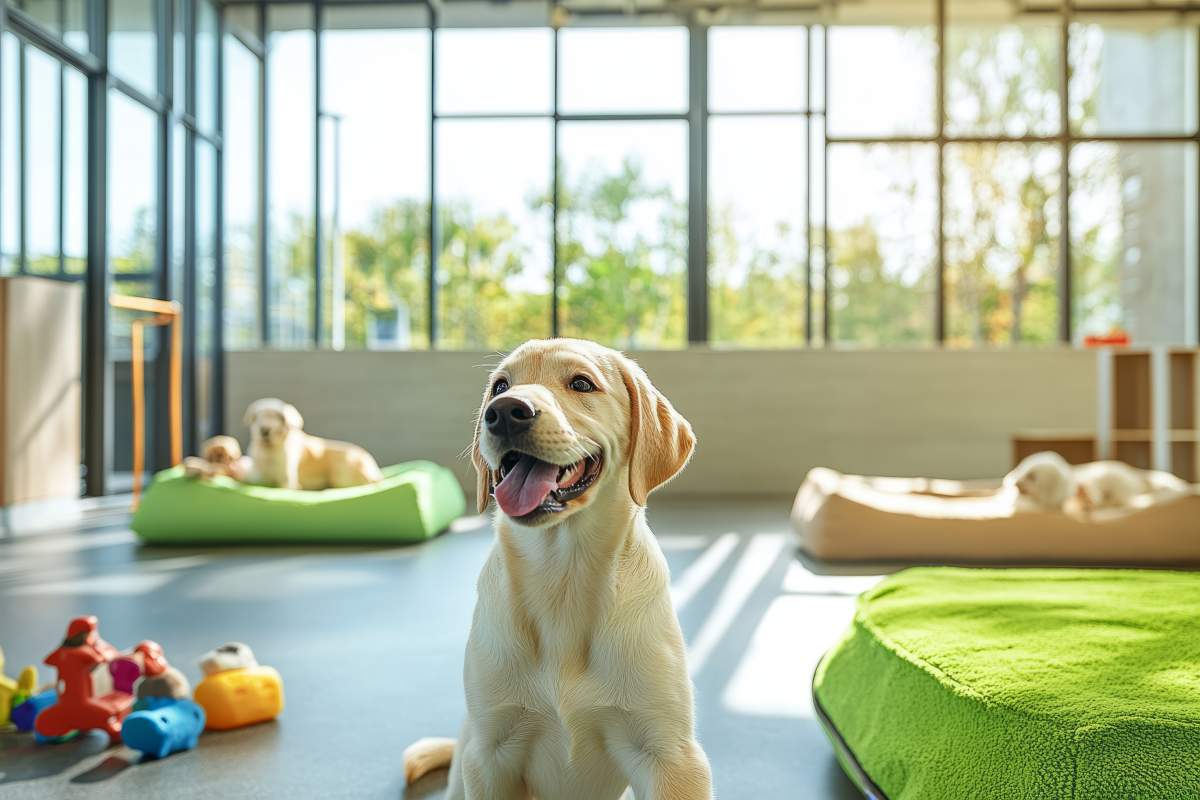
Dog daycare can provide structured daytime activity, social contact, supervision, and opportunities for rest while children are at school. This may help some dogs use their energy appropriately and avoid spending the entire day reacting to a sudden change in household activity.
A well-managed daycare routine may include:
- Supervised play with compatible dogs
- Human interaction and gentle attention
- Short training or enrichment activities
- Breaks in a quiet area
- Regular access to water and bathroom opportunities
- A predictable arrival, activity, rest, and departure pattern
The main benefit is not simply that a dog is “kept busy.” Predictability can help dogs understand what to expect. A consistent daytime rhythm may make the school-year schedule feel less abrupt, especially for dogs that were accustomed to children being present most of the day.
Daycare is not appropriate for every dog, and attendance does not automatically resolve separation anxiety. It is one possible part of a broader routine that may also include exercise, gradual alone-time practice, enrichment at home, and veterinary guidance when behavior changes are sudden or severe.
Is daycare better than leaving a dog home alone?
The answer depends on the individual dog, the length of time alone, and the home environment. Many healthy adult dogs can rest comfortably at home for part of the day if their physical and social needs are met. Some dogs, however, become distressed when left alone or become restless after long periods without activity.
Daycare may be useful when:
- A dog struggles with a sudden increase in alone time
- The household schedule leaves little opportunity for midday activity
- The dog enjoys controlled social interaction
- The dog needs more daytime enrichment than a typical walk provides
- Children returning home in the afternoon tend to trigger intense excitement
Staying home may be preferable when a dog is fearful around unfamiliar people or dogs, has health concerns requiring close monitoring, or becomes overstimulated in group settings. A quiet home routine with a walk, food puzzle, and scheduled rest can be more comfortable for some animals.
The goal is not to select the most active option. The goal is to match the dog’s temperament, age, health, and coping style.
How should families introduce daycare before school begins?
A gradual introduction is usually easier than starting with a full day immediately after the first school morning. Families can begin by asking how new dogs are evaluated, how group play is supervised, where dogs rest, and what happens if a dog becomes overwhelmed.
A practical adjustment plan might look like this:
1. Visit the facility or arrange an introductory assessment.
2. Begin with a short stay rather than a full day.
3. Observe the dog’s behavior after returning home.
4. Allow extra quiet time after the visit.
5. Increase attendance gradually if the dog remains relaxed and recovers well.
6. Keep departure and pickup routines calm and consistent.
A dog that comes home tired but content may be responding well. A dog that remains frantic, withdrawn, unusually thirsty, or unable to settle may be receiving too much stimulation. Fatigue alone is not proof that the experience was positive.
What should Eau Claire households consider in the fall?
Seasonal conditions can affect a dog’s daycare routine. Early school-year weather may shift quickly from warm afternoons to cooler mornings, while later fall brings shorter daylight hours, wet ground, mud, and colder outdoor surfaces.
Families should consider whether their dog:
- Needs a towel or coat after outdoor activity
- Has paws that become irritated by wet, cold, or gritty surfaces
- Is comfortable with indoor exercise during rain or snow
- Requires medication or special feeding instructions
- Becomes less active as daylight decreases
- Has enough calm recovery time after a busy day
Housing patterns also matter. Dogs in apartments, duplexes, and closely spaced neighborhoods may have more difficulty with barking when left alone because sound travels easily between residences. Dogs in larger homes may have more space but can still experience distress if the family’s daily pattern changes abruptly.
A daycare schedule should work alongside the household’s transportation, school activities, work hours, and weather-related delays. A plan that is too complicated may be difficult to maintain consistently.
Can daycare help with separation anxiety?
Daycare can reduce the amount of time a dog spends alone, but it does not directly teach a dog that being alone is safe. In some cases, frequent daycare may mask the problem without addressing the underlying response to departures.
Dogs with possible separation anxiety may panic soon after a person leaves, attempt to escape, damage doors or windows, bark continuously, or eliminate only when alone. These signs deserve more careful evaluation. Punishment can increase fear and usually does not teach a better coping response.
Helpful steps may include:
- Using a camera to observe behavior after departure
- Practicing very short absences that end before panic begins
- Providing a quiet resting area and familiar enrichment
- Keeping departures and arrivals low-key
- Avoiding sudden increases in alone time
- Discussing persistent or dangerous behavior with a veterinarian
Veterinary input is especially important if a dog injures itself, stops eating, develops sudden house-soiling, or shows a major personality change.
How can children help dogs adjust?
Children can support the transition by keeping interactions predictable. A dog may become confused if children are highly active before school, absent for most of the day, and then overly energetic immediately after returning.
Families can teach children to:
- Let the dog approach rather than crowding it
- Avoid rough play when the dog is tired
- Leave the dog alone while it eats or rests
- Use calm greetings after school
- Help with simple routines such as filling a food puzzle or practicing basic cues
- Recognize signs that the dog needs space
After-school excitement can be intense. A short sniffing walk, quiet play session, or decompression period may help a dog transition from a busy day to family time more effectively than an immediate burst of wrestling or chasing.
What does a balanced school-year routine look like?
A balanced routine gives a dog activity, social contact, food, bathroom opportunities, and uninterrupted rest. More activity is not always better. Dogs need time to process stimulation and sleep, particularly puppies, older dogs, and dogs that are easily aroused.
A practical routine may combine daycare on selected days with home-based enrichment on others. For example, a dog might attend daycare once or twice weekly, receive a midday walk on another day, and spend a quieter day at home with scent games and scheduled rest.
The most useful measure is the dog’s overall behavior across several weeks. Improved settling, normal appetite, relaxed body language, and consistent sleep suggest that the routine is manageable. Ongoing stress, exhaustion, reactivity, or physical problems indicate that the schedule should be reconsidered.
The return to school does not have to be a disruptive event for the family dog. With gradual changes, realistic expectations, and attention to individual temperament, daytime care can become one part of a predictable routine that supports a calmer household throughout the academic year.